Then the plant adds a second route. Then more pickup points. Then staging buffers. Then a third shift. Suddenly, the same factory faces a different truth:
A factory tries automation for the first time. A single robot runs a simple route: stores → line-side → returns. It works. Everyone’s happy.
Robots don’t scale by themselves. Operations must scale.
That’s where most automation initiatives either level up — or stall.
The moment automation becomes real
When a fleet grows, problems don’t show up as “robot failures.” They show up as everyday friction:
- Robots queueing near a door because access isn’t coordinated
- Congestion at a shared aisle intersection
- A high-priority pallet stuck behind routine tasks
- A supervisor manually calling shots to keep flow moving
- Teams asking: “We bought robots… so why are we still firefighting?”
At this stage, the robot is not the missing piece.
The missing piece is orchestration — the layer that decides what should happen next, safely and predictably.
Introducing GT-Studio: GOAT Robotics’ platform solution
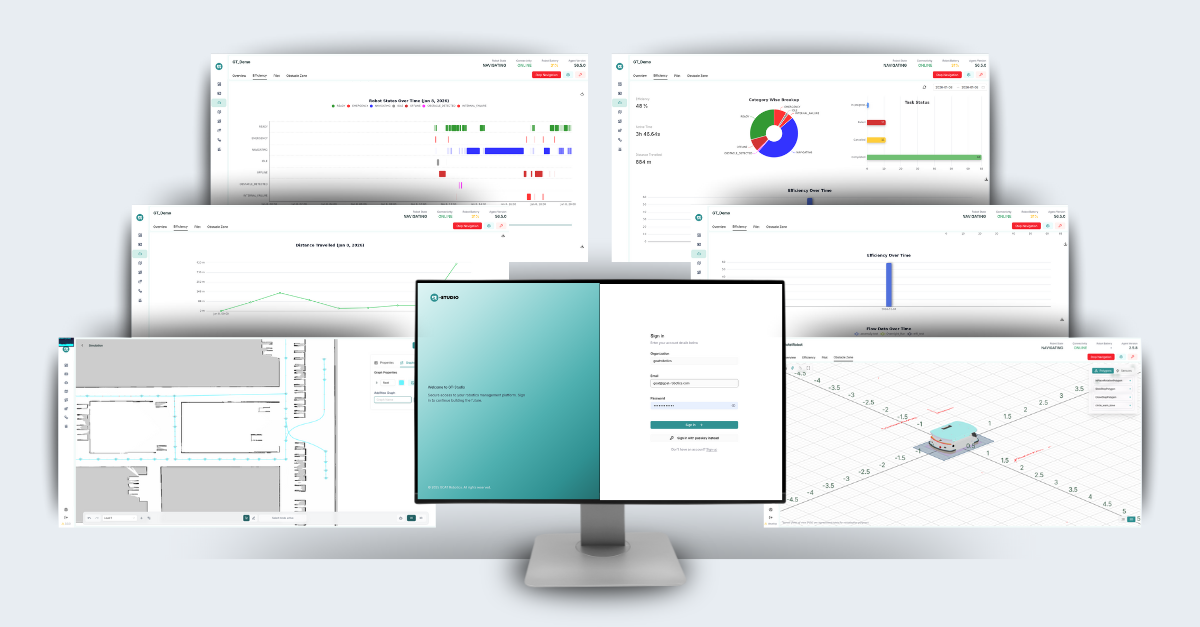
GOAT Robotics built GT-Studio as an advanced robotics platform to streamline the integration, management, and control of robot systems across local or cloud infrastructures.
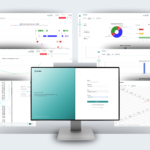
GT-Studio gives factories a single command center to:
- onboard robots seamlessly
- monitor fleets in real time
- manage maps and evolving layouts
- define site rules (zones, lanes, speeds)
- automate workflows using visual state machines
- connect robots to WMS / ERP / MES and field devices
So instead of “robots running,” you get intralogistics operating.
Built as an ecosystem (not a dashboard)
GT-Studio is designed with three connected layers: backend infrastructure, a robot agent on each robot, and a frontend interface for operators and engineers. This structure supports onboarding, secure communication, telemetry, reliability on edge devices, and real-time visibility with 3D tools and workflow builders.
Predictability comes from rules — and GT-Studio gives you the tools
In real factories, predictability is everything. GT-Studio’s site editor lets you define how robots should behave in your environment:
- docking points, charging stations, parking spots
- restricted zones and speed-limited areas
- navigation lanes and operational constraints
This is what makes robots behave like disciplined operators — not random moving objects.
“We need to change a process” shouldn’t mean “we need to build software”
Factories evolve constantly. GT-Studio supports visual workflow automation through state machines, enabling conditional logic, error recovery, integration triggers, analytics, and reusable task nodes — so teams can update operations without turning every improvement into a custom development effort.
Integration is where deployments are won
Robots only create real value when they connect to how the factory already runs.
GT-Studio supports REST APIs, webhooks, MQTT, and plugin connectors — enabling bidirectional integration with enterprise systems.
It also integrates with field devices like PLCs, conveyors, stack lights, barcode/RFID systems, safety scanners/sensors, doors, and elevators — the “physical truth layer” that makes missions operationally valid.
Scale introduces traffic — GT-Studio handles it like a system
When multiple robots share the same environment, traffic becomes a throughput killer.
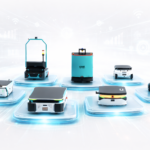
GT-Studio provides fleet orchestration and traffic control: managing multi-robot traffic, reducing congestion, enabling priority lanes, and dynamically replanning based on robot location, mission state, and battery.
That’s the difference between “a fleet exists” and “a fleet performs.”
Pallets are where the ROI often concentrates
GT-Studio supports pallet mission flows end-to-end: receiving, verifying identity, selecting destinations based on rules, put-away, staging buffers, and outbound loading — including queue staging and priority dispatch.
And with AI vision integration, the system can support pallet detection, orientation estimation, pickup validation, label reading, damage detection, and exception flagging with visual evidence.
Enterprise readiness: standards + security
For modern deployments, GT-Studio supports VDA5050 for standardized integration patterns and reduced vendor lock-in risk.
It also follows ISO 27001-grade security principles, including strong access controls, encryption, secure key handling, and auditability.
Closing
The first robot proves a point.
A platform proves a system.
GT-Studio is GOAT Robotics’ platform solution for predictable intralogistics — where fleets, workflows, and integrations operate together like one coordinated layer.