Factory Logistics at a Breaking Point
Factory logistics has quietly become one of the biggest constraints on manufacturing productivity. As production volumes increase, product variants multiply, and delivery timelines shrink, internal material movement struggles to keep up. Manual handling, forklifts, and fixed routes often introduce delays, safety risks, and inefficiencies that ripple across the entire operation.
Autonomous Mobile Robots (AMRs) are emerging as a transformative solution to these challenges. Unlike traditional automation systems, AMRs bring flexibility, intelligence, and adaptability to factory logistics. This blog explores what AMRs are, how they are used in real factory environments, and why they are shaping the future of internal logistics.
Why Factory Logistics Is Holding Operations Back
In many factories, logistics has evolved organically rather than strategically. Materials are moved using a combination of manual carts, forklifts, and fixed infrastructure—often designed for a different scale or product mix.
Common challenges include:
- Bottlenecks between production stages
- Dependency on skilled operators for repetitive transport
- Congestion and safety risks on shop floors
- Difficulty adapting routes when layouts or processes change
- Limited visibility into real-time material movement
As factories scale, these issues become more pronounced. Even highly automated production lines can suffer if internal logistics cannot match their pace and flexibility.
What Are Autonomous Mobile Robots (AMRs)?
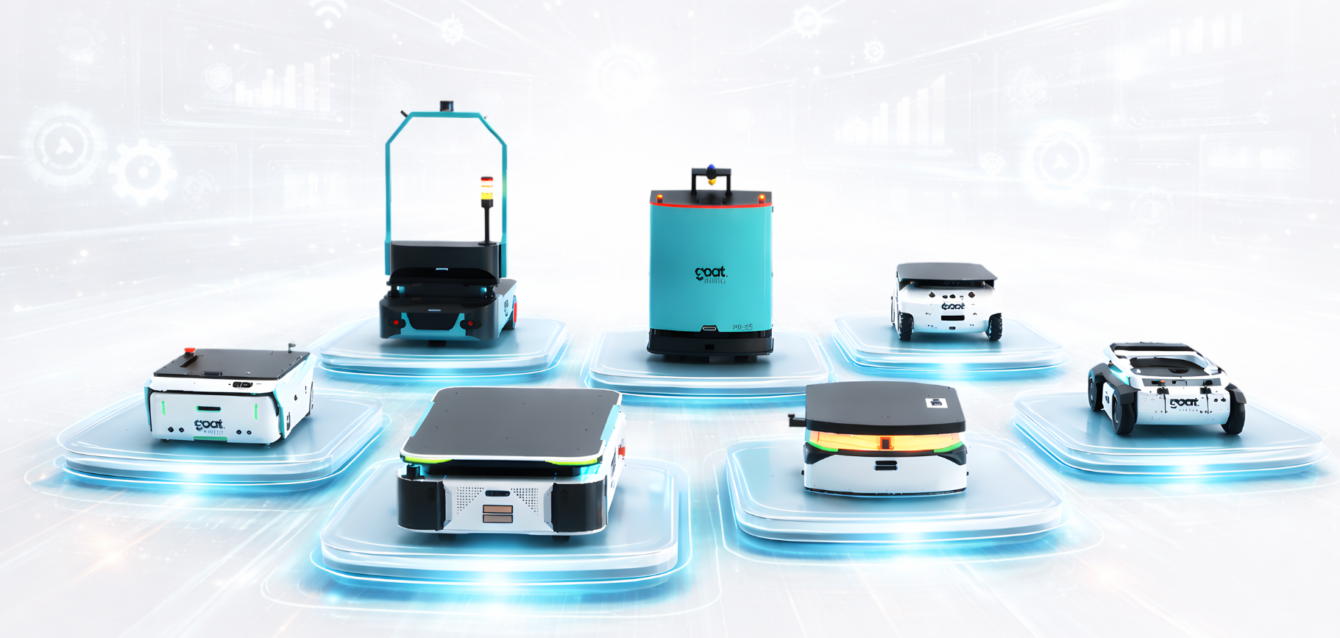
Autonomous Mobile Robots are self-navigating robots designed to transport materials within factories and warehouses without fixed paths or external guidance.
Unlike traditional automated systems:
- AMRs do not rely on predefined tracks or magnetic tapes
- They dynamically plan routes using sensors and onboard intelligence
- They can adapt to obstacles, layout changes, and traffic conditions
AMRs typically use technologies such as:
- LiDAR and vision sensors for navigation
- Real-time mapping and localisation
- Intelligent control software for task execution
This allows them to operate safely alongside humans while continuously optimising movement across the facility.
AMRs vs Traditional Logistics Methods
Understanding the difference between AMRs and conventional systems helps clarify their value.
Manual Handling & Forklifts
- High flexibility but labour-intensive
- Increased safety risks
- Difficult to scale consistently
AGVs (Automated Guided Vehicles)
- Fixed routes and infrastructure
- Limited adaptability
- Higher effort to modify layouts
AMRs
- Flexible navigation without fixed paths
- Faster deployment and reconfiguration
- Better suited for dynamic factory environments
This shift from rigid automation to adaptive automation is what makes AMRs particularly relevant for modern factories.
How AMRs Are Used in Factories
AMRs are not limited to a single function. Their versatility allows them to support multiple logistics tasks across different industries.
Typical application patterns include:
- Line-side material supply: Delivering components to production lines on demand
- Inter-process transport: Moving semi-finished goods between workstations
- Warehouse-to-production movement: Bridging storage and manufacturing areas
- Finished goods handling: Transporting products to packaging or dispatch zones
In most environments, AMRs work as part of a hybrid system—supporting human workers rather than replacing them.
Why AMRs Change the Economics of Logistics
The introduction of AMRs impacts factory performance beyond simple transport automation.
Key business-level benefits include:
- Operational flexibility: Routes and tasks can change without physical rework
- Improved safety: Reduced forklift traffic and manual lifting
- Predictable flow: Consistent material availability at workstations
- Scalability: Easy addition of robots as demand grows
- Process resilience: Less dependence on individual operators
Rather than optimising for speed alone, AMRs help factories achieve stable, repeatable, and scalable logistics operations.
Building AMRs for Real Factory Conditions
At GOAT Robotics, AMRs are designed with a strong focus on practical deployment rather than theoretical capability. Factory environments are complex—crowded layouts, mixed traffic, variable loads, and evolving processes are the norm, not the exception.
The approach emphasises:
- Adaptability to changing layouts and workflows
- Safe human–robot coexistence
- Seamless integration with existing material handling systems
- Designs suited for Indian factory conditions and operational realities
By focusing on usability and integration, AMRs become a natural extension of factory operations rather than a disruptive add-on.
FAQs: Autonomous Mobile Robots in Factory Logistics
Are AMRs suitable for both small and large factories? Yes. AMRs can be deployed in small numbers initially and scaled gradually as operations grow.
Do AMRs require major infrastructure changes? No. One of the key advantages of AMRs is minimal infrastructure dependency compared to fixed automation.
Can AMRs work alongside humans safely? Yes. AMRs are designed with sensors and safety systems that allow them to navigate shared spaces safely.
How long does it take to deploy AMRs? Deployment timelines vary by use case, but AMRs are generally faster to deploy than fixed automation systems.
Looking to modernise your factory logistics? Explore autonomous mobile robot solutions with GOAT Robotics.